Lacrosse is one of the fastest-paced and most physically demanding youth sports. With constant running, rapid direction changes, physical contact, and high-energy gameplay, young players push their bodies to the limit each time they step on the field. As the intensity rises, so does the need for proper hydration.
That’s where lacrosse hydration tips come into play. Staying properly hydrated doesn’t just keep young athletes from feeling tired or overheated—it directly influences performance, stamina, focus, and safety. Dehydrated players are more likely to suffer from fatigue, cramping, and diminished cognitive function, all of which can hurt their game and their health.
More importantly, hydration is a habit—not a one-time fix. Helping your child understand and apply the right lacrosse hydration tips throughout the day, during training, and on game days builds consistency and resilience. Whether you’re a parent preparing a game bag or a coach running practices, knowing how to keep players fueled and focused with the right hydration strategies makes all the difference.
This blog shares detailed, practical lacrosse hydration tips to help young athletes perform at their best, recover quickly, and develop healthy habits that will benefit them long after the final whistle blows.
Why Hydration Matters in Lacrosse
Lacrosse requires endurance, speed, strength, and fast decision-making. Dehydration affects all of these. When athletes are low on fluids, their bodies can’t regulate temperature, transport nutrients, or remove waste efficiently. This results in sluggish performance, delayed reaction times, and a higher risk of injury.
Hydration also impacts the brain. Dehydrated athletes may struggle to focus, follow plays, or communicate effectively on the field. Applying proven lacrosse hydration tips is one of the easiest and most effective ways to keep athletes sharp—physically and mentally.
It’s not just about performance. Hydration also protects players from heat-related illnesses like heat exhaustion or heat stroke, which are real risks during long practices or tournaments in warm weather. These lacrosse hydration tips aren’t optional—they’re essential.
Pre-Game Hydration Strategies
Effective hydration starts well before the game begins. One of the most valuable lacrosse hydration tips is to help athletes “preload” with fluids hours before play. This helps them step onto the field already primed for physical activity, rather than trying to catch up once they’re sweating.
Encourage athletes to begin drinking water the day before a game. On game day itself, use this schedule:
- Drink 16–20 ounces of water 2–3 hours before warm-ups
- Add another 8–10 ounces about 20–30 minutes before starting
- Avoid sugary sodas and energy drinks, which can dehydrate rather than hydrate
One smart lacrosse hydration tip is to check urine color in the morning. Light yellow? You’re good. Darker shades? Time to drink more.
Hydration During Practices and Games
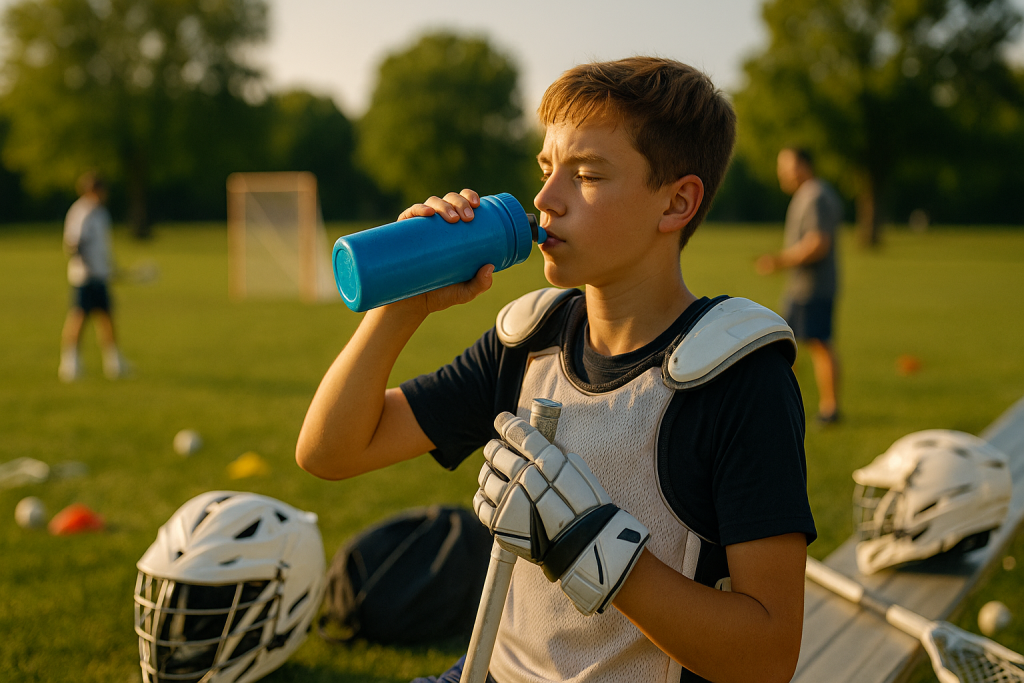
Once the action starts, so does fluid loss—especially on hot or humid days. One of the most crucial lacrosse hydration tips is to have a plan for drinking throughout the game. Waiting until thirst hits means you’re already behind.
Help athletes stay on track by:
- Drinking 7–10 ounces of water every 15–20 minutes
- Adding sports drinks for longer practices or in extreme heat to replace lost electrolytes
- Making hydration routine—schedule water breaks, not just “as needed”
Another practical lacrosse hydration tip is to label water bottles and pack extras. Kids are notorious for losing gear, and nothing ruins a good hydration plan like an empty cooler or a missing bottle.
Post-Game Hydration and Recovery
The job isn’t done when the final whistle blows. Recovery begins with rehydration. Smart lacrosse hydration tips include fluid replacement to restore what was lost in sweat and exertion.
Aim to drink 16–24 ounces of fluid for every pound lost during play. Not everyone weighs in before and after games, so steady sipping throughout the hour after the game is a good rule of thumb.
To support rehydration and recovery:
- Offer chocolate milk for fluid and protein
- Include water-rich fruits like watermelon and oranges
- Encourage small, frequent sips rather than chugging
Parents can help by packing a post-game cooler with drinks and hydrating snacks—one of the easiest and most appreciated lacrosse hydration tips around.
Recognizing the Signs of Dehydration
Even with good habits, dehydration can still sneak in. Knowing what to look for allows you to act fast before symptoms get serious.
Watch for:
- Headaches or dizziness
- Dry mouth and dark-colored urine
- Fatigue, cramps, or irritability
- Difficulty focusing or slower reactions
If you spot these signs, it’s time to pause, hydrate, and cool down. One of the most important lacrosse hydration tips is to prioritize safety above everything else. A short break now can prevent a longer setback later.
Hydrating with Food: The Overlooked Secret Weapon
Not all hydration comes from drinks. One of the most overlooked lacrosse hydration tips is to add more water-rich foods to an athlete’s diet. These foods not only help hydrate but also provide nutrients essential for recovery and performance.
Great options include:
- Watermelon, strawberries, and oranges
- Cucumbers, celery, and bell peppers
- Yogurt, smoothies, and broth-based soups
Adding these foods to meals or snacks, especially on game days, helps round out your hydration strategy and keeps young players fueled.
Choosing the Best Hydration Drinks
Water is always the go-to, but there are times when other beverages can be helpful. One of the more strategic lacrosse hydration tips is knowing when to mix it up.
Smart choices include:
- Water – the foundation of every hydration plan
- Electrolyte drinks – ideal for long sessions or hot weather
- Coconut water – a natural option with potassium
- Diluted fruit juices – good for a light sugar and flavor boost
Avoid soda, high-sugar sports drinks, and energy drinks, which can cause more harm than help. Keep it simple, balanced, and focused on real hydration needs.
Daily Hydration Habits That Stick
Consistency is key. The best lacrosse hydration tips aren’t just about game day—they’re about creating a routine that supports athletic performance every day of the week.
Encourage habits like:
- Drinking water as soon as they wake up
- Keeping a refillable bottle on hand at all times (home, school, practice)
- Drinking water with meals
- Setting reminders for water breaks if they tend to forget
Helping kids build these habits early supports long-term health and performance, not just in lacrosse but in life.
Creating a Game-Ready Hydration Checklist
Being prepared takes the stress out of game day and helps athletes stay focused. One of the most effective lacrosse hydration tips is creating a checklist parents and players can follow.
Must-haves for your hydration kit:
- Two labeled water bottles
- Cooler with drinks and fruits
- Electrolyte drink mixes or tablets
- Hydration-friendly snacks
- Cooling towels and backup clothes for hot weather
Preparation builds confidence, and confidence improves performance. Plus, it helps players stay in the zone instead of scrambling to find a drink.
Tournament Day Hydration Tips
Tournament days bring extra demands. Multiple games, longer hours in the sun, and tight schedules make hydration more challenging. That’s why having specific lacrosse hydration tips for tournament days is a must.
Keep these in mind:
- Pack multiple water bottles and backup fluids
- Use snacks like frozen grapes, watermelon, or oranges for hydration + energy
- Bring electrolyte options for between-game replenishment
- Set hydration reminders every hour
- Store everything in a cooler to keep drinks cold and inviting
Being proactive helps players perform at their best all day long—not just in the first game.
Hydration Tips for Cold Weather Games
Most people associate hydration with hot summer tournaments, but cold-weather games can be just as demanding on the body—and just as risky when it comes to dehydration. One of the lesser-known lacrosse hydration tips is to stay on top of fluid intake even when temperatures drop.
In cooler weather, players often feel less thirsty, which makes it easier to forget to drink water. But physical exertion still causes fluid loss through sweat and respiration. Wind and cold air can even increase the rate of water loss through breathing, making hydration more important than it may appear.
Here are a few cold-weather lacrosse hydration tips:
-
Warm fluids count – Offer warm water or low-sugar sports drinks in insulated bottles to keep players hydrated and comfortable.
-
Set hydration reminders – Thirst may not be as obvious, so encourage regular water breaks by setting a schedule.
-
Dress smart – Layering helps manage sweat. When players sweat under bulky gear, it’s easy to lose fluids and not realize it.
Helping players understand the need for hydration in all weather conditions is an important part of comprehensive lacrosse hydration tips. When the mindset becomes “hydrate regardless of the season,” long-term performance and safety improve dramatically.
Final Thoughts on Lacrosse Hydration Tips
Hydration is one of the simplest yet most powerful ways to support young lacrosse athletes. From improved endurance and focus to faster recovery and better safety, following smart lacrosse hydration tips helps players stay at their best—both on and off the field.
The best approach is consistent, flexible, and tailored to each athlete’s needs. With daily habits, game-day plans, and emergency knowledge in place, parents and coaches can build a foundation that keeps kids healthy, confident, and ready to compete.
Use these lacrosse hydration tips as your guide—and make hydration a habit that fuels every play, every game, and every goal.
STXZ private lessons
Find a lacrosse coach near you
Private lessons with independent coaches, booked and paid through STXZ.
- 01Share your goalsYour player’s age, level, goals and the days that work for your family.
- 02Get matchedWe match you with an independent, background-checked coach near you.
- 03Start lessonsMeet at a field close to home, with you or another adult you choose there for every lesson.